Free Printable ADHD Behavior Charts: 5 School Templates
Print five free ADHD behavior chart templates for school. Customize goals for attention, task initiation, and organization. No account needed.
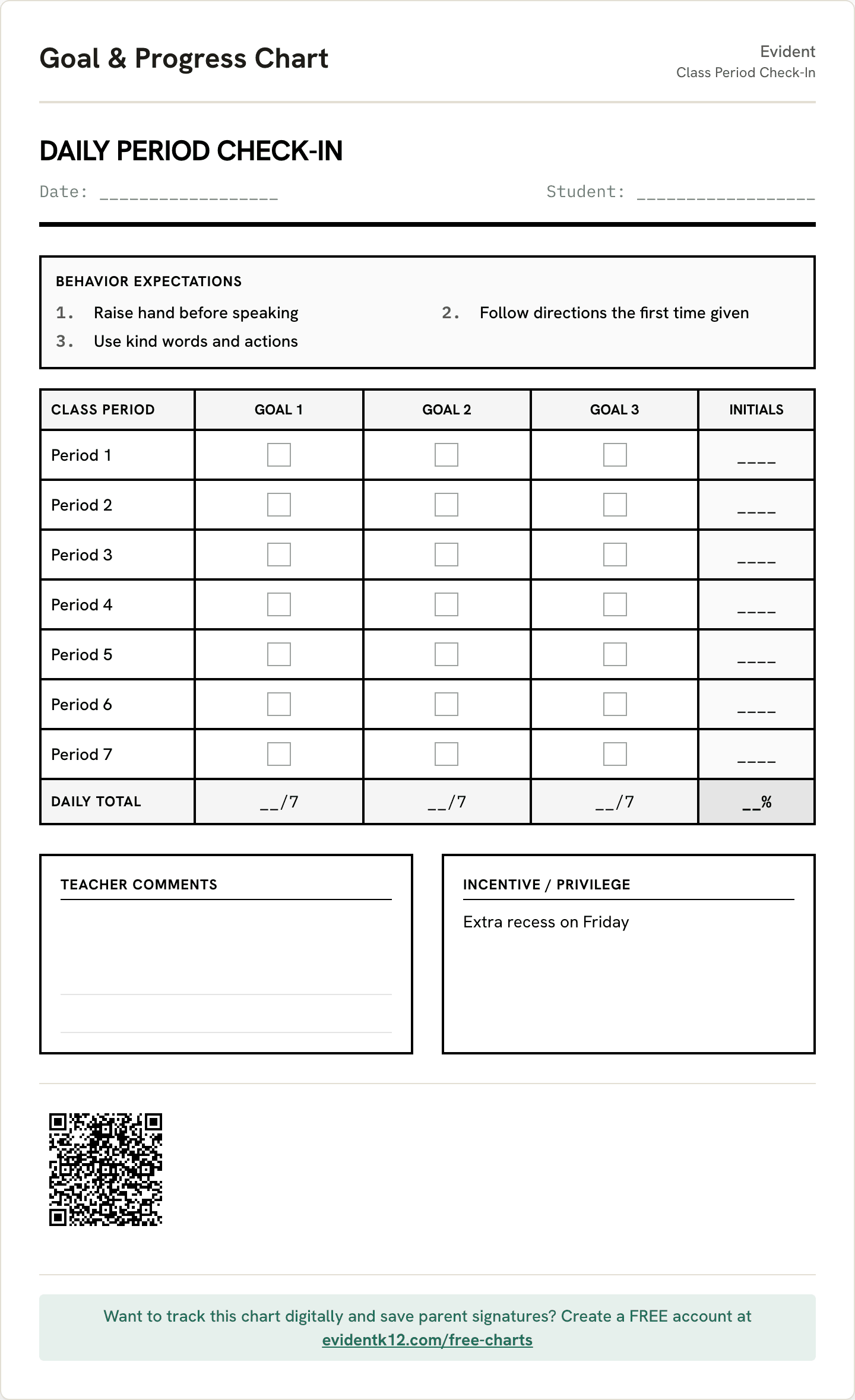
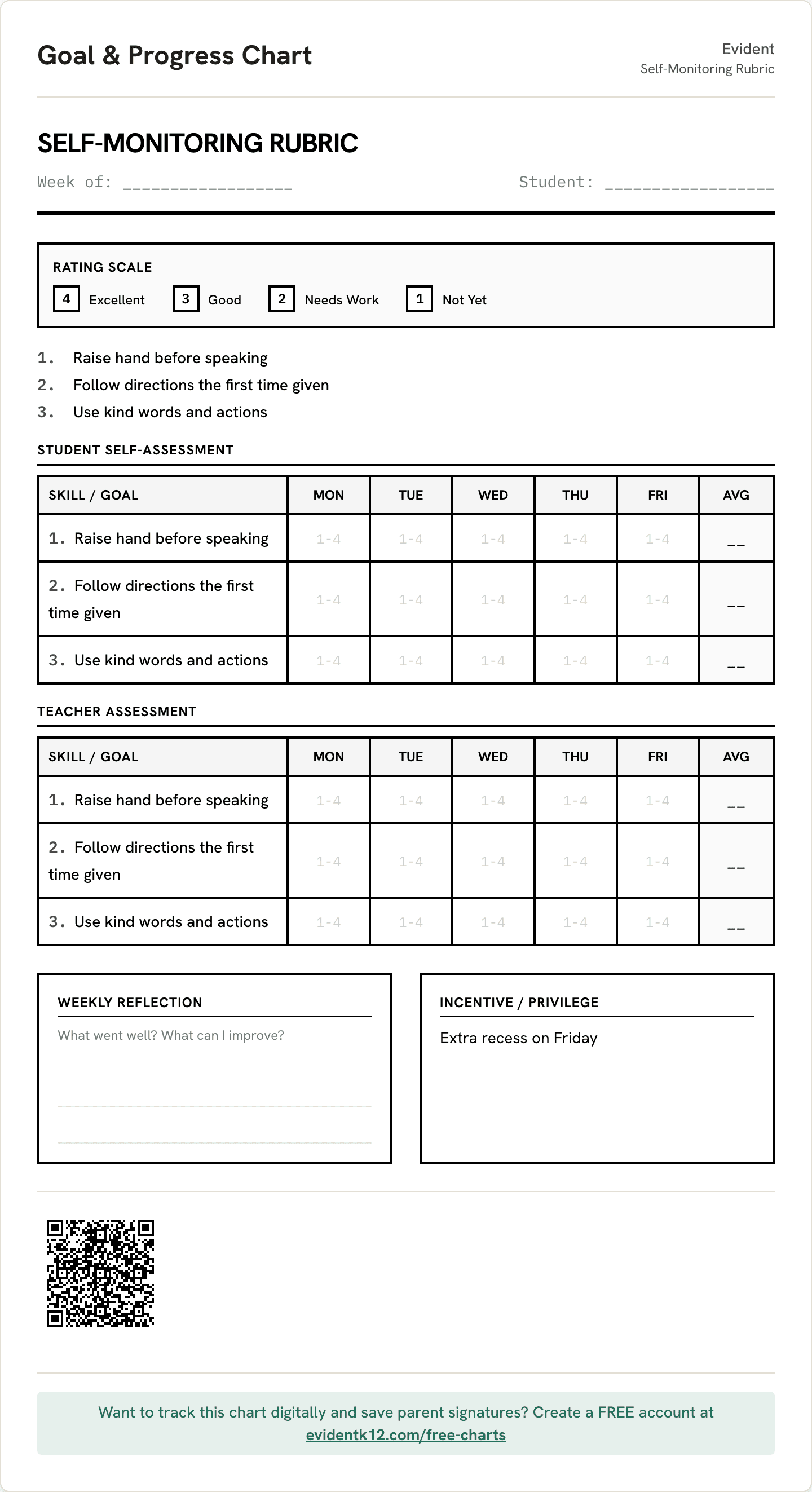
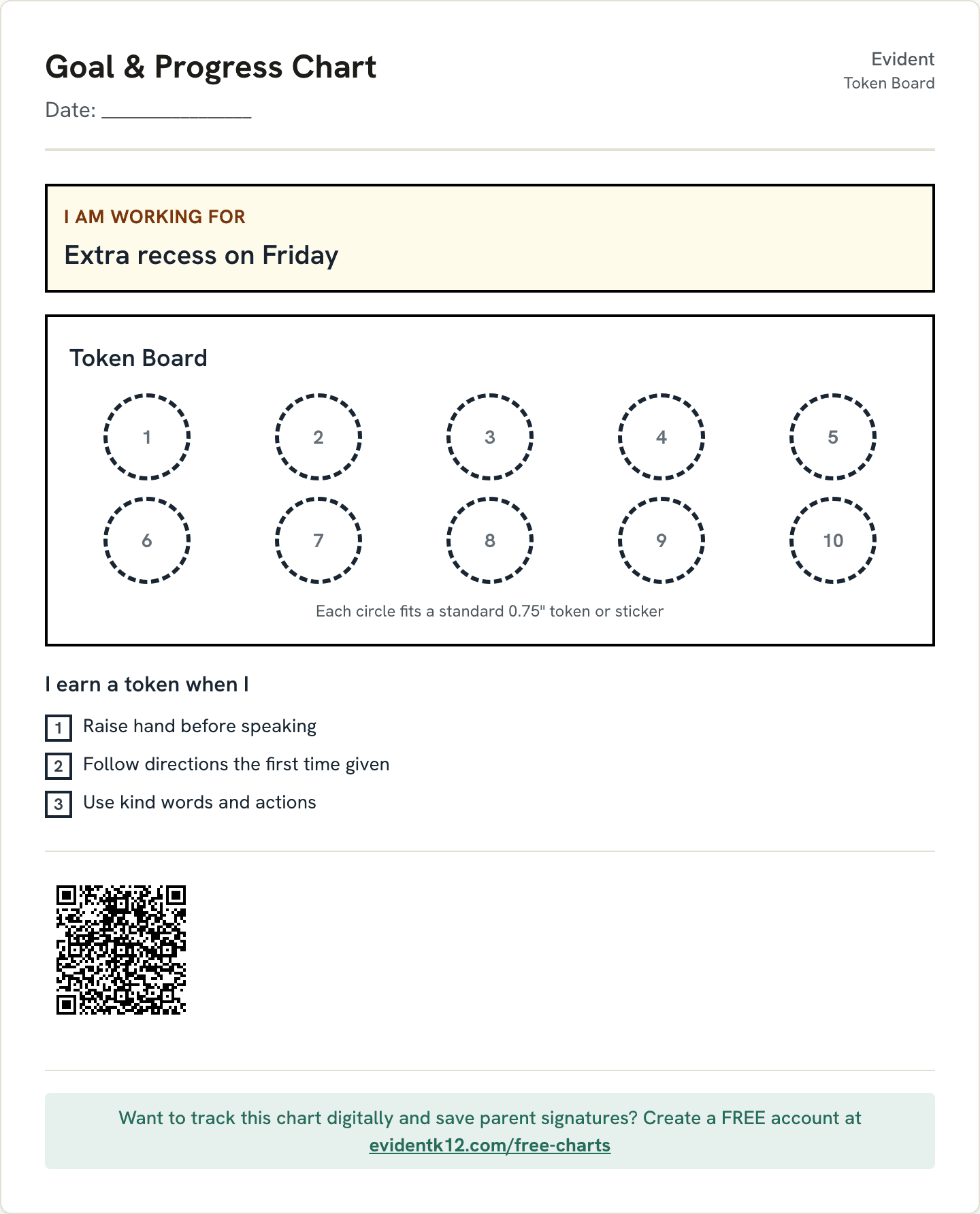
A behavior chart for a student with ADHD has one job most charts are not built for: it has to work inside the moment of distraction, not after it. A chart reviewed at the end of the day asks the student to remember a morning they were not fully present for. A chart marked at the end of each period, or each task, gives feedback while the behavior is still in reach.
This guide covers the printable formats that fit that requirement, the goals that are actually about ADHD rather than about compliance, and how to print any of them free in about two minutes. It is written for teachers, but the same charts go home, and several are designed to.
Print One Right Now
Each link opens a ready-made chart for that goal. Pick a layout, adjust the wording, print.
| Goal | What it targets | Print it |
|---|---|---|
| Begin tasks promptly without excessive prompting | Task initiation | Print this chart |
| Stay on task during independent work | Sustained attention | Print this chart |
| Bring necessary materials to class | Organization | Print this chart |
| Manage time effectively during class and independent work | Time awareness | Print this chart |
| Hold and use information to complete multi-step tasks | Working memory | Print this chart |
| Return to task after a break | Re-engagement | Print this chart |
| Wait for others to finish before speaking | Impulse control | Print this chart |
| Transition between activities calmly | Flexibility | Print this chart |
| Keep desk and work area organized | Organization | Print this chart |
Browse more in executive function, self-regulation, academic habits, or every printable chart.
What an ADHD Chart Has to Do Differently
Feedback in the moment. The gap between the behavior and the mark has to be short. For a younger student that means after each task or each block. For a middle or high schooler it means after each period. Once a day is too late.
Track skills, not sitting still. Most ADHD charts fail because they track the symptom ("stayed in seat") instead of the skill the student is building ("started the task within two minutes"). The symptom-tracking chart punishes the student for having ADHD. The skill-tracking chart gives them something to practice.
Show the pattern across the day. A student with ADHD who is focused in first period and unravels after lunch is giving the team information. A daily rating averages it away. A period-by-period chart keeps it, and that pattern is often what leads to the accommodation that actually helps: the seat change, the movement break, the afternoon check-in.
Expect the chart to wear out. Novelty is part of what makes any chart work, and students with ADHD habituate faster. Plan to change the theme, the goals, or the format every few weeks rather than treating the drop-off as failure.
The 5 Formats
1. Class Period Check-In
Best for: Middle and high school, or any student who changes rooms
One row per period, two to four goal columns, a box for each teacher's initials, and a total for the day. Each teacher marks at the end of their period. The student carries it, or a digital version carries it for them.
Why it works for ADHD: It is the only common format that shows when things go well and when they do not. Two weeks of period data will show a post-lunch dip or a Friday crash more reliably than any observation, and it gives the 504 or IEP team the evidence to match supports to the time of day.
2. Daily Check-In
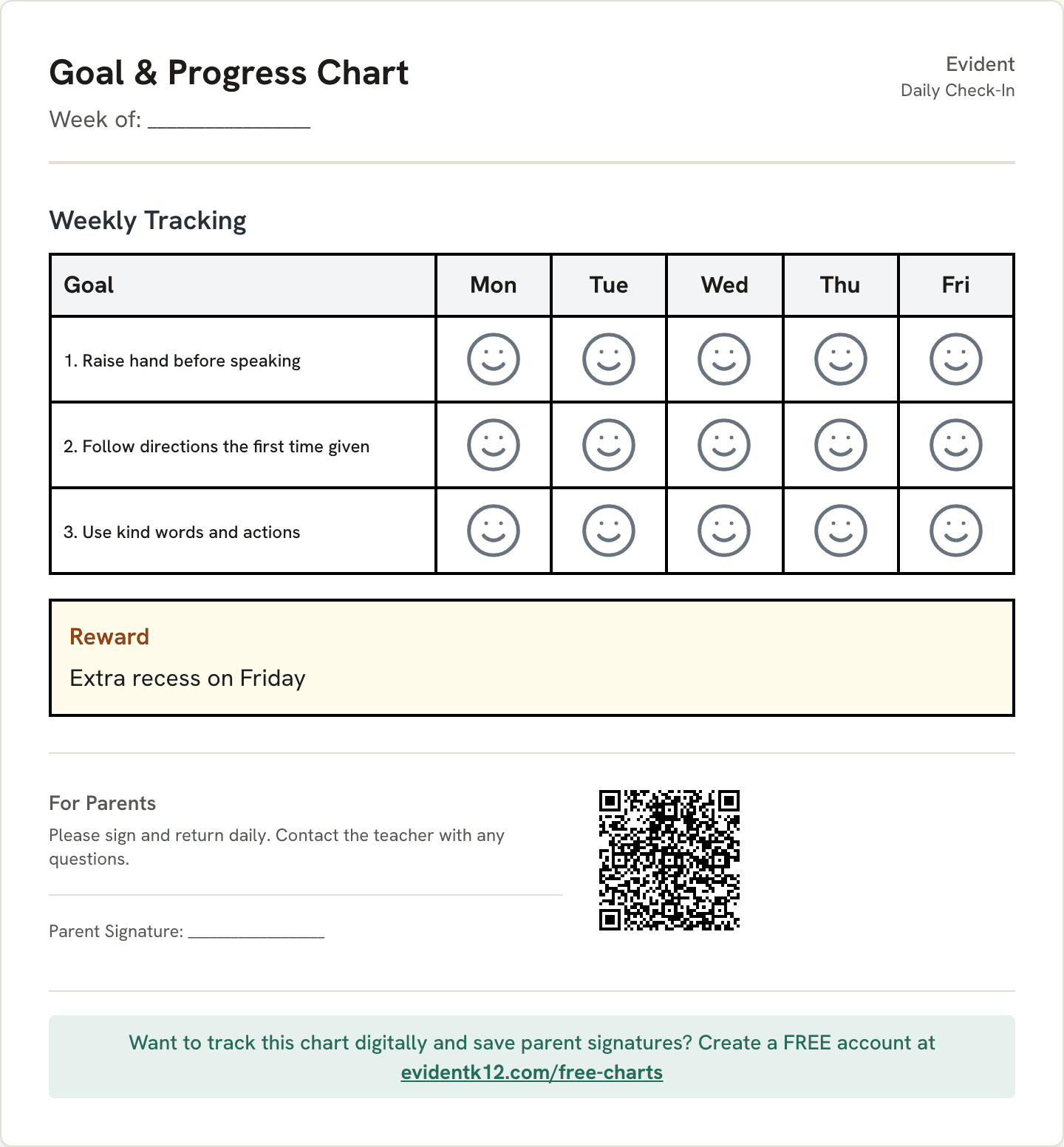
Best for: Elementary, self-contained classrooms
Goals down the side, a column for each school day, and a mark at the end of the day. For feedback more often than once a day in a room the student does not leave, use the class period check-in and write a block of the day (morning work, reading, math, specials) beside each period row.
Why it works for ADHD: It is the simplest daily record, and it keeps the goals in front of the student all day. Run by block, the same idea gives feedback every forty-five minutes instead of every six hours.
3. Self-Monitoring Rubric
Best for: Grades 5 and up, students ready to rate themselves
The student rates their own focus, task initiation, or organization on a 1 to 4 scale before the teacher does. Both ratings sit on the same sheet.
Why it works for ADHD: Self-monitoring is itself an executive-function skill, and one that students with ADHD are often behind on. The chart teaches it directly. The gap between self-rating and teacher rating usually narrows over a few weeks, which is the real progress.
4. Token Board
Best for: One target behavior, fast feedback, younger students
A board with ten numbered circles. Each time the target behavior happens, a token goes in. Full board earns the reward. It resets.
Why it works for ADHD: The board is finite and visible. "Three more" is something a student with ADHD can hold onto. "Keep it up all day" is not. It works especially well for task initiation: a token each time the student starts within the time limit.
5. Home-School Note
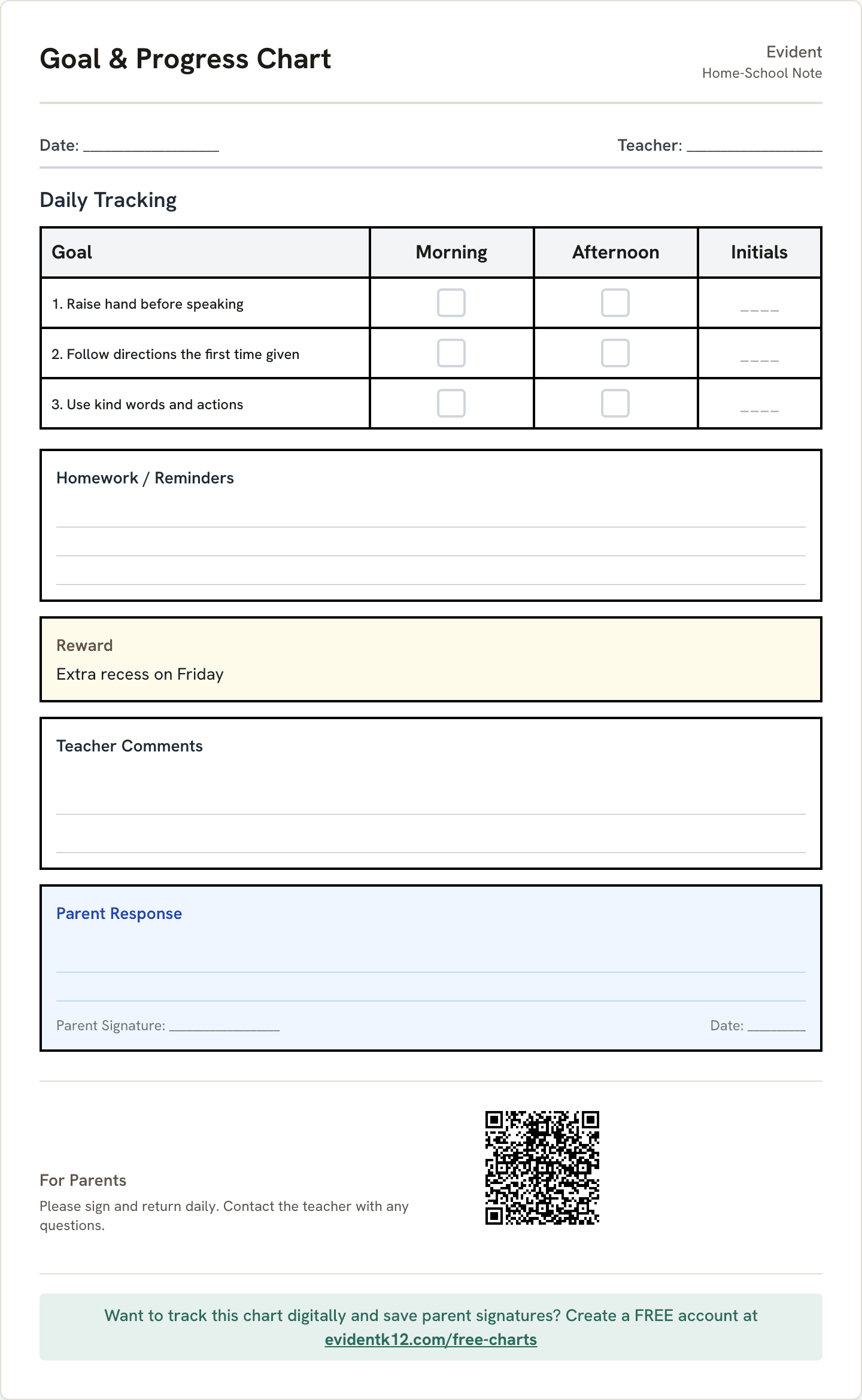
Best for: Families who want daily information, and students on medication where the family is tracking timing
A short daily sheet with the day's goals, met or not met, a line for a teacher comment, and a line for the family to sign. It goes home every day.
Why it works for ADHD: Many families of students with ADHD are actively adjusting supports at home, and a daily note is the information they need to do that. It also keeps the home and school versions of the goal the same, which matters more for this group than for most.
Goals That Are About ADHD, Not About Compliance
The executive function category in the goal library was written for exactly this. A few principles for choosing or writing your own:
- Name the skill. Task initiation, sustained attention, working memory, time awareness, organization, flexibility, impulse control. Each goal should map to one.
- Put a number in it where you can. "Begin within two minutes." "Stay on task for ten minutes." The number makes the goal observable and makes progress measurable.
- Include the strategy. "Use the checklist to pack up" tracks whether the student used the tool, not just whether the backpack was packed. When the tool works, the chart shows it.
- Start with one the student can already meet. A chart where the student earns nothing the first week confirms what they already believe about charts.
How to Customize and Print
All five formats are free in the chart maker:
- Pick a template. Class Period Check-In, Daily Check-In, Self-Monitoring Rubric, Token Board, or Home-School Note.
- Add two to four goals from the executive function or self-regulation categories, or write your own.
- Pick a theme. For many students with ADHD, the theme is the difference between a chart that gets looked at and one that does not. Type any interest and get a matching theme. The themed charts guide shows what is available.
- Translate it if home speaks another language. All 28 languages print side by side.
- Print it. Make it in a free account and the QR code in the corner opens the family's view of the chart on their phone.
No account is required to print. If the chart is part of a 504 plan or IEP, or if you want the period-by-period pattern without hand-tallying it, the free plan (up to 30 students, no expiry) keeps every mark as a dated data point. Our ADHD support page covers how the same check-ins roll into accommodation tracking and IEP progress data.
Using the Chart as 504 or IEP Evidence
A printed chart supports a conversation. It does not, on its own, show a trend across twelve weeks, because nobody can see a trend in a stack of loose sheets. If the chart is feeding a formal decision, three things matter:
- Every mark is dated. A tracked chart does this automatically. A paper chart does it only if the date is on every sheet and the sheets are kept.
- The accommodations are logged alongside. A period check-in that shows focus improved after a seat change in week three is evidence the accommodation worked. Without the note about the seat change, it is just a line going up.
- The family has seen it. A family that has watched the daily chart for six weeks is a family that arrives at the meeting already knowing what the data says.
If paper is the right route for now, the free printable IEP data sheets put the goal, the date, and the recording method on the sheet itself, so a stack of them still reads as a record. The frequency, duration, and interval sheets suit on-task and focus goals, and they print without an account.
Our guides to behavior tracking for IEP and 504 meetings and documenting accommodations go deeper.
For the full set of formats across all grades, see free printable behavior charts for teachers. For the same problem in grades 6 to 8 specifically, see behavior charts for middle school.
Frequently Asked Questions
What is the best behavior chart for a child with ADHD? One that gives feedback within the period or the task, not at the end of the day, and that tracks a skill (task initiation, staying on task, organization) rather than a symptom (sitting still). For students who change classrooms, a class period check-in. For younger students, a daily check-in with task blocks or a token board.
How often should a student with ADHD get feedback on the chart? After each period, each block, or each task. The shorter the gap between behavior and mark, the more the chart teaches. Once a day is too late for most students with ADHD.
How many goals should an ADHD behavior chart have? Two to four. More than that competes for the attention the chart is trying to build.
Should the chart be about behavior or about executive function skills? Skills. "Began the task within two minutes" is something the student can practice. "Was good" is not. The executive function goal category was written for this.
Can I use a printed chart for a 504 plan? It can support the conversation, but a 504 or IEP review will want dated data over time, and loose sheets are hard to turn into that. Tracking the same chart online makes every mark a dated data point.
Are these charts really free? Yes, with no account required to print. The free plan for online tracking covers a full class and does not expire.
Pick a goal.
Print it free.
152 charts in 28 languages, no account. Or write your own goal in the editor.
Logging it every day? A free account keeps the record for up to 30 students.
Go deeper in the resource library
- 504 and IEP Accommodation Examples by NeedGuide · 11 min read
- ABC Observation Log: Worksheet with a Filled ExampleWorksheet · 6 min read
- Special Education Documentation Starter Kit: Week OneGuide · 13 min read